


What Do Jewels Do in a Watch? 17, 21, 24 and 25 Jewels Explained
FIYTA FIYTA
Nov 08, 2026

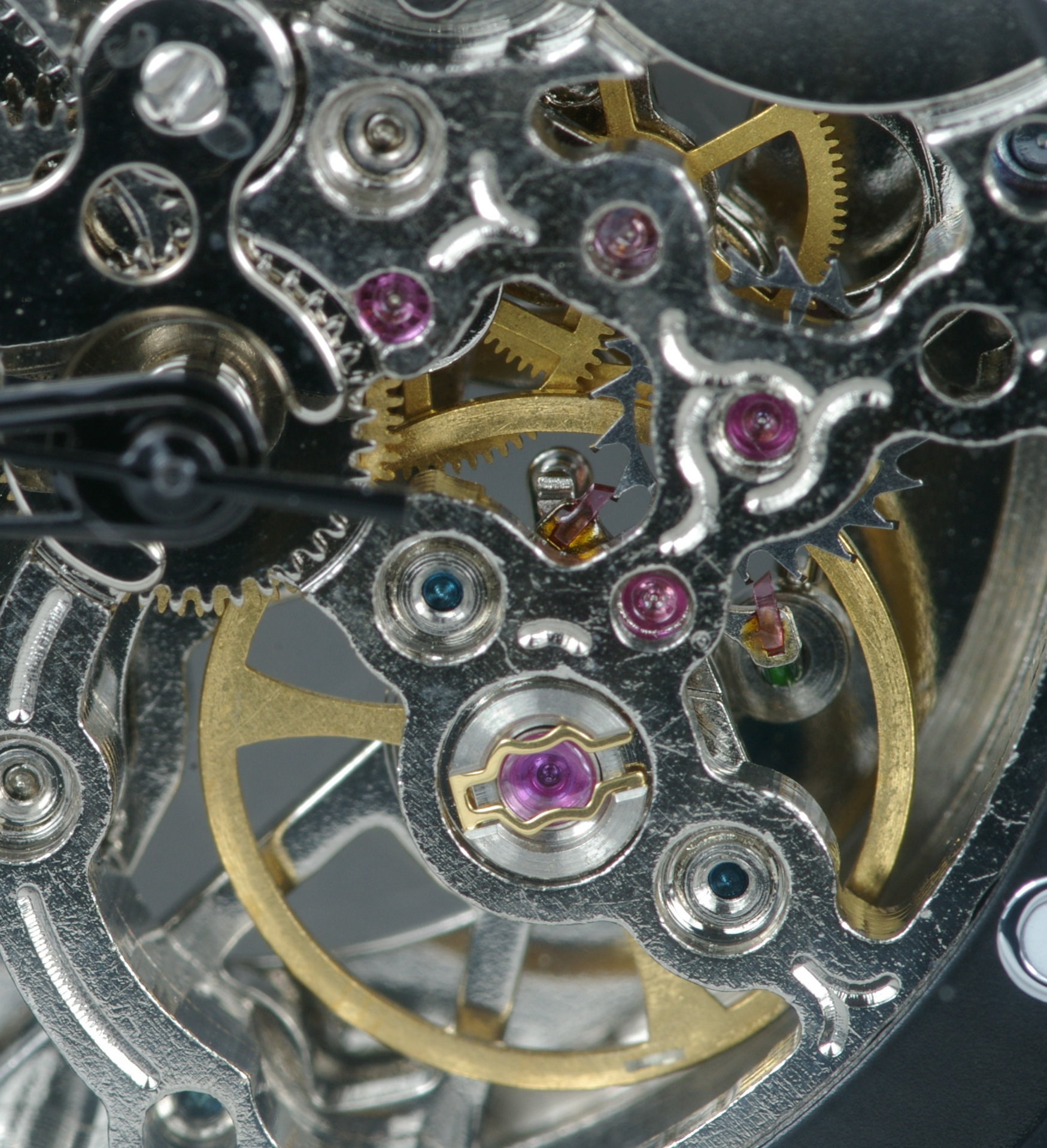
Turn over a mechanical watch with a transparent case back, and you may notice several tiny red or pink circles scattered among its bridges, gears and screws. Some movements also have the words "21 Jewels", "24 Jewels" or "25 Jewels" engraved on a rotor or plate.
It is easy to assume those numbers indicate quality. After all, gemstones are valuable, and more usually sounds better. A watch with 25 jewels must surely be more sophisticated than one with 17, right?
Not necessarily. The tiny red components are not there to make the watch look expensive. They perform specific mechanical jobs, and the total number tells us considerably more about the movement's construction than about luxury or prestige.
Understanding watch jewels reveals something interesting about mechanical timekeeping. Some of the parts that help a movement remain reliable are almost invisible, even when the movement is displayed through an open case back.
In This Guide
What Are Jewels in a Watch Movement?
Watch jewels are small, extremely hard components used at selected bearing and contact points inside a timekeeping movement. In modern production, they are usually made from synthetic ruby, a laboratory-produced form of corundum. Synthetic sapphire belongs to the same mineral family, although its appearance and particular uses may differ.
These are real crystalline materials with useful physical properties, not red plastic decorations. Their value in watchmaking comes primarily from hardness, resistance to wear, the quality of their finished surfaces and the precision with which they can be manufactured.
The word "jewel" can therefore be misleading. You are not buying a collection of precious gemstones hidden inside a wristwatch. You are looking at miniature precision components designed to interact with metal pivots and other moving parts.
Why Are Synthetic Rubies Used?
A useful comparison is a bearing in a wheel, although the construction inside a watch is much smaller and more delicate. A bearing supports a moving component while helping control friction and wear. In a watch movement, some jeweled bearings support extremely fine metal shafts, whose ends are called pivots.
Those pivots need to remain properly positioned as the movement operates. If their supporting surfaces wear excessively, the geometry of the mechanism can change and its performance may suffer.
Synthetic ruby offers a durable surface that can be made with tiny, precisely shaped openings and carefully finished contact areas. Its material consistency also makes it practical for modern manufacturing.
Historically, natural gemstones were used in some timepieces. The development of synthetic materials made it possible to produce jeweled components much more consistently and economically.
Are Watch Jewels Real Gems?
They are genuine crystalline corundum when made from synthetic ruby, but they should not be confused with jewelry-grade stones valued for rarity, size or beauty. A jewel bearing may be only a tiny ring or disk, made to precise dimensions rather than cut for decorative display.
The same basic material can also appear in very different shapes. Some jewels are ring-like bearings with a central hole. Others are flat endstones, angular pallet stones or small projections associated with the escapement.
The distinction between useful mechanical components and decorative jewels matters enough to have its own technical standard. ISO 1112:2009 defines functional and non-functional horological jewels and addresses their description in movement markings and advertising.
It does not create a universal watch-quality rating based on jewel count. Its relevance is the function of the jewels, not the assumption that the largest number wins.
Why Do Mechanical Watches Need Jewels?
A mechanical watch is constantly moving, even when it appears perfectly still on your wrist. Its mainspring releases stored energy through the gear train, while the escapement and balance regulate how that energy is delivered.
Many of those moving components turn on small pivots. The supporting surfaces experience repeated contact through thousands of hours of operation. Without appropriate materials and lubrication, wear at those points could gradually affect movement geometry and performance.
Jewels provide hard, stable contact surfaces that help manage this problem. Their job is not to make the mechanism frictionless, but to provide suitable bearing or working surfaces where precision and repeated contact matter.
How a Ruby Bearing Supports a Steel Pivot

Imagine a very fine steel pivot turning inside a small hole. The pivot needs enough clearance to move, but not so much that the connected wheel can shift unnecessarily. Its supporting surface also needs to maintain its shape over repeated cycles.
A carefully finished ruby bearing can serve that role. Its hardness helps resist wear, and the bearing opening can be manufactured to a very precise geometry. In many designs, a small quantity of appropriate lubricant further controls the contact between the metal pivot and the jewel surface.
This is why the statement "jewels eliminate friction" is incorrect. The system still involves contact, movement, loads and lubrication. The bearing material contributes to good performance, but it does not remove the laws of mechanics.
Why Not Put Jewels Everywhere?
Different components have different operating requirements. A rapidly oscillating balance pivot, a slower wheel arbor and a winding component do not necessarily benefit from the same bearing design.
Some movement parts work perfectly well with different bearing materials. Others need specific jewel shapes to handle their loads or to interact with the escapement.
Adding a jewel without a useful mechanical role does not automatically improve the movement. A simpler construction may be entirely appropriate when a particular component does not require a jeweled bearing.
Jewels also do not create or store energy. That is the mainspring's job. For a broader explanation of stored energy and runtime, our guide to automatic watch power reserve explains how a mechanical movement continues operating between windings.
The jewels help particular parts of that energy-transmission system operate with controlled contact and wear. They are important, but they are only one part of the engineering.
Four Common Types of Watch Jewels and What They Do
Not all watch jewels resemble little red rings. Some are bearings, some provide axial support, and others participate directly in the escapement. Understanding those differences explains why a movement may have an odd jewel count and why not every jewel can be seen through the back of the watch.
Hole Jewels and Cap Jewels
A hole jewel contains a precisely formed opening through which a pivot passes. It provides bearing support and helps keep the arbor in the correct position.
The hole jewel is especially important for controlling radial movement, meaning motion sideways relative to the pivot's axis. It does not necessarily provide all the axial support that a particular pivot needs.
A cap jewel, also called an endstone, is usually a small flat bearing surface positioned at the end of a pivot. It provides a contact surface that can help control movement along the axis.
In certain balance-bearing assemblies, hole jewels and cap jewels work together. This matters because wristwatches change orientation constantly. A watch may rest dial-up on a desk, hang vertically on the wrist, or rotate between positions during the day.
Those changes affect how mechanical loads act on small pivots. Suitable bearing geometry helps the movement operate across different orientations. Some designs also incorporate shock-protection settings and springs, which allow controlled movement during an impact.
The jewel is only one element of such an assembly. The setting, spring and pivot geometry also matter. It would be misleading to say that the ruby alone provides complete shock protection.
Pallet Jewels and Impulse Jewels
Some of the most important watch jewels are not pivot bearings at all. In a conventional Swiss lever escapement, two pallet jewels are mounted at the working ends of the pallet fork.
These jewels interact with the teeth of the escape wheel as the escapement locks, unlocks and transfers energy. Their shape and positioning are critical to how the mechanism operates.
An impulse jewel, also called a roller jewel, is associated with the balance assembly. It interacts with the pallet fork to help transmit impulses to the balance.
Unlike a typical hole jewel, the impulse jewel is not a ring around a rotating steel pivot. It has its own geometry and specific mechanical purpose.
This also helps explain why watch jewel counts are often odd numbers. Not every jewel appears as one half of a pair. A conventional lever escapement contains a single impulse jewel.
Different escapement designs can use different components and arrangements. These four categories describe common traditional functions, not every possible jewel used in all modern horology.
What Do 17, 21, 24 and 25 Jewels Mean on a Watch?
The number engraved on a movement is a description of its jewel components, not a direct statement about accuracy, finishing or value. Its significance becomes much clearer when connected to a real movement and the jobs its components perform.
What Does 17 Jewels Mean?
Seventeen jewels is a familiar figure in traditional mechanical watchmaking. One conventional 17-jewel lever movement places jewels at important gear-train bearings, the balance bearings, the pallet-fork pivots and the working components of the escapement.
The exact arrangement may vary, but a classic example can be explained as follows:
| Location | Number | Function |
|---|---|---|
| Balance hole jewels | 2 | Radial support for balance pivots |
| Balance cap jewels | 2 | End support for balance pivots |
| Pallet-fork pivot jewels | 2 | Support the pallet-fork arbor |
| Pallet stones | 2 | Contact the escape-wheel teeth |
| Impulse / roller jewel | 1 | Transfers impulses to the balance |
| Center-wheel bearings | 2 | Support the center-wheel arbor |
| Third-wheel bearings | 2 | Support the third-wheel arbor |
| Fourth-wheel bearings | 2 | Support the fourth-wheel arbor |
| Escape-wheel bearings | 2 | Support the escape-wheel arbor |
| Total | 17 | Illustrative traditional layout |
This arrangement follows a traditional lever-watch construction described in historical horological teaching. It is not a mandatory arrangement for every movement marked 17 jewels. Manufacturers can distribute jewels differently according to their designs.
Seventeen is also not a universal minimum for a good movement. The British Horological Institute describes traditional fully jeweled constructions with at least 15 jewels in appropriate layouts.
A properly designed 17-jewel movement can therefore be entirely suitable for its intended purpose. Its actual quality depends on far more than the number engraved on a bridge.
What Does 21 Jewels Mean?
Twenty-one jewels is another common figure, especially among automatic movements. The Miyota 8215 is a useful modern example because its specifications are published directly by the manufacturer.
The Miyota 8215 has 21 jewels, a frequency of 21,600 vibrations per hour and an approximately 42-hour running time. Its current official specifications also list manual winding and a stop-second device.
Those details tell us more about the movement than the count alone. They describe how the movement operates and what features are available to the wearer.
The figure 21 does not mean that every 21-jewel movement shares the same architecture. Different manufacturers may place additional jewels in different mechanisms.
Without the actual movement documentation, it would be unjustified to say that the four-jewel difference between a particular 17-jewel movement and the Miyota 8215 comes from one universal arrangement.
What About 24 and 25 Jewels?
The Miyota 9015 uses 24 jewels. Its official specifications also list a frequency of 28,800 vibrations per hour, an approximately 42-hour running time, and a movement height of 3.90 mm.
The 8215, by comparison, operates at 21,600 vibrations per hour and has a height of 5.67 mm.
That difference involves movement architecture, dimensions and frequency, not merely three extra jewel components.
Seiko provides another useful comparison. The 4R35 has 23 jewels and a date display. The closely related 4R36 has 24 jewels and displays both the date and day of the week.
Both are rated at 21,600 vibrations per hour, with approximately 41 hours of power reserve.
The ETA 2824-2 gives us a familiar 25-jewel example. It operates at 28,800 vibrations per hour and has a typical power reserve of approximately 42 hours.
| Movement | Jewels | Frequency | Power Reserve |
|---|---|---|---|
| Traditional hand-wound example | 17 | Varies | Varies |
| Miyota 8215 | 21 | 21,600 vph | Approx. 42 h |
| Seiko 4R35 | 23 | 21,600 vph | Approx. 41 h |
| Seiko 4R36 | 24 | 21,600 vph | Approx. 41 h |
| Miyota 9015 | 24 | 28,800 vph | Approx. 42 h |
| ETA 2824-2 | 25 | 28,800 vph | Typical 42 h |
These figures come from the published specifications of Miyota, Seiko and ETA. The traditional 17-jewel row is an illustrative construction, not a particular modern caliber.
Look closely at the comparison. Two 24-jewel movements can have different frequencies and architectures. Movements with different jewel counts can also have similar running times.
The numbers describe separate engineering characteristics. They do not form a ranking from worst to best.
Does Having More Jewels Make a Watch Better or More Accurate?
More jewels can be useful when the movement's construction genuinely needs them. Beyond that, the count is a poor shortcut for judging quality.
Imagine two movements, one with 21 jewels and another with 25. The additional components may support a different winding system, another mechanical function, or a different bearing arrangement.
Those additions could be useful for that specific architecture. They do not automatically mean that the balance is better regulated, the components are made to tighter tolerances, or the finished watch keeps more accurate time.
Jewel Count and Accuracy Are Different Specifications
A mechanical movement's rate depends on its regulating system and operating condition. Factors can include balance behavior, escapement geometry, adjustment, positional variation, temperature, magnetism, winding state and wear.
The jewel count provides very little direct information about how those variables have been controlled.
For example, Seiko lists the 23-jewel 4R35 and the 24-jewel 4R36 with the same factory-adjusted daily accuracy specification: +45 to -35 seconds under the stated conditions.
That does not guarantee identical performance on every wrist. Seiko explicitly notes that actual rate can vary with wearing conditions, temperature, movement and the state of the mainspring.
What it does demonstrate is that a movement with one extra jewel does not automatically receive a better published accuracy category.
Miyota's 8215 and 9015 have different published accuracy tolerances, but they also differ in frequency, thickness and overall construction. It would be misleading to claim that additional jewels directly caused the entire difference.
What About Durability and Quality?
Properly positioned jewels can help reduce wear in important locations. But long-term durability also depends on lubrication, assembly quality, materials, sealing, maintenance and the stresses experienced by the watch.
Similarly, a movement with many jeweled components may be legitimately complex, while a simpler design may need fewer.
The question is whether each jewel serves a real mechanical purpose. An excessive count without a corresponding functional reason should not be treated as a prestige feature.
If you are comparing watches for practical timekeeping, look at the exact movement's published tolerance and the behavior of the finished watch. Our guide to automatic watches running fast or slow explains why average rate, consistency and sudden changes matter more than a single jewel-count figure.
Do Quartz Watches Have Jewels Too?
Yes. Some quartz watch movements contain jewels, even though they regulate time electronically instead of using a conventional mechanical balance and lever escapement.
An analog quartz watch still contains moving mechanical parts. Its motor and gear train position the hands, and some designs use jewelled bearings at selected contact points.
For example, the ETA E01.701 is a quartz movement with five jewels, according to ETA's official specifications.
That does not mean every quartz movement has five jewels. The number depends on the particular construction. Some quartz movements use fewer, more or no jewel bearings at all.
It is also important not to confuse two very different components: the quartz crystal that provides the timing reference and a synthetic ruby jewel that acts as a mechanical bearing.
They perform different jobs. A jewel-bearing count does not turn a quartz movement into a traditional mechanical watch.
This is one reason the 21-jewel specification of an automatic movement cannot be directly compared with the five jewels of a quartz caliber. The two mechanisms have different architectures and operating requirements.
For the broader difference between their timekeeping systems, read our mechanical versus quartz watch movement guide.
Do Watch Jewels Wear Out or Need Lubrication?
Synthetic ruby is hard and highly resistant to wear, but a jeweled movement is not maintenance-free.
The bearing system also includes metal pivots, closely controlled clearances, other movement components and lubricants chosen for specific conditions.
In many bearing arrangements, a small quantity of lubricant is applied where a pivot interacts with a jewel. Its job is to help control friction and wear.
The material's hardness does not eliminate the need for suitable lubrication. The lubricant and the geometry of the bearing are part of the complete system.
Why Lubrication Still Matters
Watch movements operate with extremely small components and carefully controlled amounts of oil.
Using too much lubricant can be as undesirable as using too little. Oil may spread away from the intended contact area, contaminate nearby components or alter the behavior of a mechanism.
Lubricants can also deteriorate, migrate or become contaminated over time. Their performance depends on their formulation, application and the movement's operating conditions.
That is why a watch may require professional inspection or service despite using jeweled bearings in critical locations.
Can the Jewels Themselves Be Damaged?
Yes. High hardness does not mean that a material is impossible to chip or fracture.
A severe impact, improper handling or incorrect service procedure can damage a jewel or its surrounding assembly.
The metal pivot can also become worn or damaged even if its ruby bearing remains intact. The health of the movement depends on the complete contact system, not on the jewel alone.
A watch that loses accuracy, develops a shorter power reserve or behaves unpredictably may have a lubrication-related problem, but many other causes are possible.
Magnetism, impact, regulation, winding issues and damage elsewhere in the movement can produce similar symptoms.
Why You Should Not Oil a Movement Yourself
Servicing a movement involves far more than adding a drop of oil. A proper service may include inspection, disassembly, cleaning, component evaluation, lubrication, reassembly, regulation and testing.
Opening a watch without the correct tools and working conditions can introduce dirt, damage delicate parts or compromise water resistance.
There is also no single maintenance interval that applies to every mechanical watch. The exact movement, its use, age, condition and manufacturer guidance all affect the decision.
For ordinary ownership, follow the automatic watch maintenance guide. If the movement's behavior changes significantly, our article on when to service a luxury watch explains how to approach professional assessment.
The practical lesson is simple: jeweled bearings help control wear, but they are only one part of a larger mechanical system that still requires appropriate care.
How Much Should Jewel Count Matter When Buying a Watch?
Jewel count is useful technical information, but it belongs alongside other movement specifications, not above them.
If two watches have different jewel counts, start by identifying their exact calibers. Without that information, the numbers reveal surprisingly little.
A manufacturer's technical sheet may tell you about frequency, accuracy, power reserve, movement dimensions, winding capability, calendar functions and servicing.
Those details help explain how the movement is designed and whether its characteristics fit the way you intend to use the watch.
What Should You Check Before Buying?
| Specification | Why It Matters |
|---|---|
| Exact movement caliber | Identifies the design being evaluated |
| Jewel count | Describes part of its bearing and escapement construction |
| Published accuracy range | Provides the manufacturer's intended timing tolerance |
| Power reserve | Describes approximate runtime from a suitable winding state |
| Winding and stop-seconds functions | Affects everyday setting and operation |
| Servicing and parts support | Influences long-term ownership |
A buyer interested in a thinner automatic watch might place more value on movement height than on the difference between 21 and 24 jewels. Someone who rotates several watches may care more about power reserve. Another buyer may prioritize published accuracy or service availability.
The jewel count can help describe the movement, but it cannot decide these priorities for you.
Why the Exact FIYTA Model Matters
At FIYTA, we believe it is more useful to explain the actual movement than to treat a single technical number as a marketing shortcut.
FIYTA watches use different movement configurations across the product range. Some models have publicly documented movement details, while others are described more generally as using an automatic mechanical movement.
That distinction is especially important when discussing jewel count.
If the exact movement inside a watch has not been confirmed, it would be misleading to assign it the jewel count of a superficially similar model or a third-party movement assumed to be inside.
For a broader explanation of different calibers and available specifications, see our guide to FIYTA watch movements.
The same principle applies to any watch brand. When a retailer describes a watch as having 25 jewels, it is sensible to ask which movement supplies that specification.
Are the Jewels Valuable?
The tiny synthetic rubies used in modern movements are not usually a major source of a watch's retail value as gemstones.
The cost of an entire watch depends on factors such as engineering, component manufacturing, assembly, finishing, materials, quality control, distribution and after-sales support.
A movement with 25 jewels should therefore not be assumed to contain more precious gemstone value than one with 17 in a way that makes the finished watch a better investment.
Can You Count All the Jewels Through a Case Back?
Usually not. Some jewel bearings are visible on the movement bridges, but others may be hidden beneath components, on the dial side or inside mechanisms that cannot be seen without disassembly.
The visible red circles are not a reliable inventory of every jewel inside the movement.
A complete count is better verified through the manufacturer's technical documentation rather than through a photograph.
For those considering their first mechanical watch, our guide to choosing a FIYTA automatic watch explains the wider ownership decision, including movement type, fit, intended use and daily practicality.
Final Thoughts: The Right Jewels Matter More Than the Number
The tiny red components inside a watch do important work. They help support moving pivots, control wear and perform key functions in the escapement.
But the number printed on a movement should never be mistaken for a universal quality score.
A 17-jewel movement is not automatically inferior to a 21-jewel design, and a 25-jewel movement is not guaranteed to outperform one with 24.
Different movements use different architectures, parts and engineering priorities.
If you want to understand what the jewels in a particular watch actually tell you, begin with the exact movement and the functions those jewels perform. Then consider the movement's accuracy, reliability, maintenance and how well it suits your needs.
The most useful question is not simply how many jewels a watch contains. It is whether those jewels are doing the right jobs in a well-designed movement.


Mentioned


29 mm · Automatic · Synthetic sapphire
$495.00 USD
Extra 10% off at checkout


